Lessor vs lessee: who is who in a lease
By Jenna Whitfield -

The lessor is the party who owns a property, or holds the right to lease it, and grants someone else the right to use it for a time. The lessee is the party who receives that right and pays rent for it. In a home rental, the lessor is the property owner and the lessee is the tenant.
This guide covers what each word means, a quick way to tell them apart, who can be a lessor or a lessee, what each side usually owes, how sublessors and sublessees fit in, and what happens when either side changes. It is general information and is not legal advice. Rules vary by state and city. Check your local law or an attorney.
What is a lessor?
A lessor is the party who leases a property out. By signing the lease, the lessor gives the lessee the right to live in or use the property for the lease term, in return for rent and the lessee's other promises. The lessor keeps ownership, and the right to the property comes back to them when the lease ends.
The lessor is usually the owner of record: a person, two or more co-owners, a trust, or a company that holds the title. A property manager often signs leases and collects rent, but usually does so as the owner's agent. The owner stays the lessor, and the lease should say whose agent the manager is.
What is a lessee?
A lessee is the party who takes the lease. In a residential rental, the lessee is the tenant who signs the lease, moves in and pays the rent. When two or more adults sign the same lease, each one is a lessee, often called co-lessees or co-tenants.
People who live in the home without signing the lease, such as children or a partner listed as an occupant, are usually occupants. They can live there under the lease's terms, but the promises in the lease are the signers' promises.
Lessor vs lessee at a glance
| Lessor | Lessee | |
|---|---|---|
| Who they are in a home rental | The property owner, or whoever holds the right to lease it | The tenant who signs the lease |
| What they give | The right to use the property for the term | Rent, and the promises in the lease |
| What they get | Rent, and the property back at the end | The right to live in or use the property |
| Other words for them | Owner, property owner (a manager signs as the lessor's agent) | Tenant, renter, resident |
| Usual duties | Hand over the property, make repairs the law and lease require, respect the tenant's privacy | Pay rent on time, follow the lease, take care of the property |
A quick way to remember which is which
English uses the same pair of endings in many legal words. The "-or" is the one who gives, and the "-ee" is the one who receives: an employer and an employee, a payor and a payee, a grantor and a grantee. The lessor grants the lease, and the lessee receives it.
What each side usually owes
The lease and the law where the property sits set the exact duties. In most residential leases, they look something like this.
The lessor usually:
- hands over the property on the start date, in the condition the lease and local law require;
- makes the repairs the law and the lease put on the owner, and keeps the home fit to live in;
- gives notice before entering, as the lease and local law require; the notice of entry guide covers how;
- holds and returns the security deposit within the time the law sets, less any lawful deductions.
The lessee usually:
- pays the rent in full and on time;
- follows the lease's rules on pets, guests, noise, parking and subletting;
- takes care of the property and pays for damage beyond normal wear and tear;
- gives the notice the lease requires before moving out, and hands back the keys.
When either side breaks the lease, the other side's options depend on the lease and local law. A lessee who breaks a rule usually gets a written notice first; the lease violation notice guide covers what to put in one.
Who is responsible when there is more than one lessee
Many leases make co-lessees "jointly and severally" liable. That usually means the lessor can collect the whole rent, or the cost of any damage, from any one of them, and the lessees settle between themselves who owes what. If two co-lessees split an $1,800 rent and one pays only their $900 share, a lease with that wording usually lets the lessor ask either lessee for the unpaid $1,800 - $900 = $900.
A guarantor is a different role. A guarantor signs a separate promise to pay if the lessee does not, and has no right to live in the home. A co-signer who signs the lease itself may be treated much like a co-lessee for what is owed, though usually without living there. What the signed documents say is what counts.
Sublessor and sublessee
When a lessee rents the home, or part of it, to someone else, the lessee becomes a sublessor and the new occupant a sublessee, or subtenant. The original lease stays in place between the lessor and the lessee. The sublease guide covers how a sublease differs from an assignment and what property owners should put in writing.
The chain usually runs one way. The sublessee answers to the lessee under the sublease, and the lessee still answers to the lessor under the original lease, including for the rent.
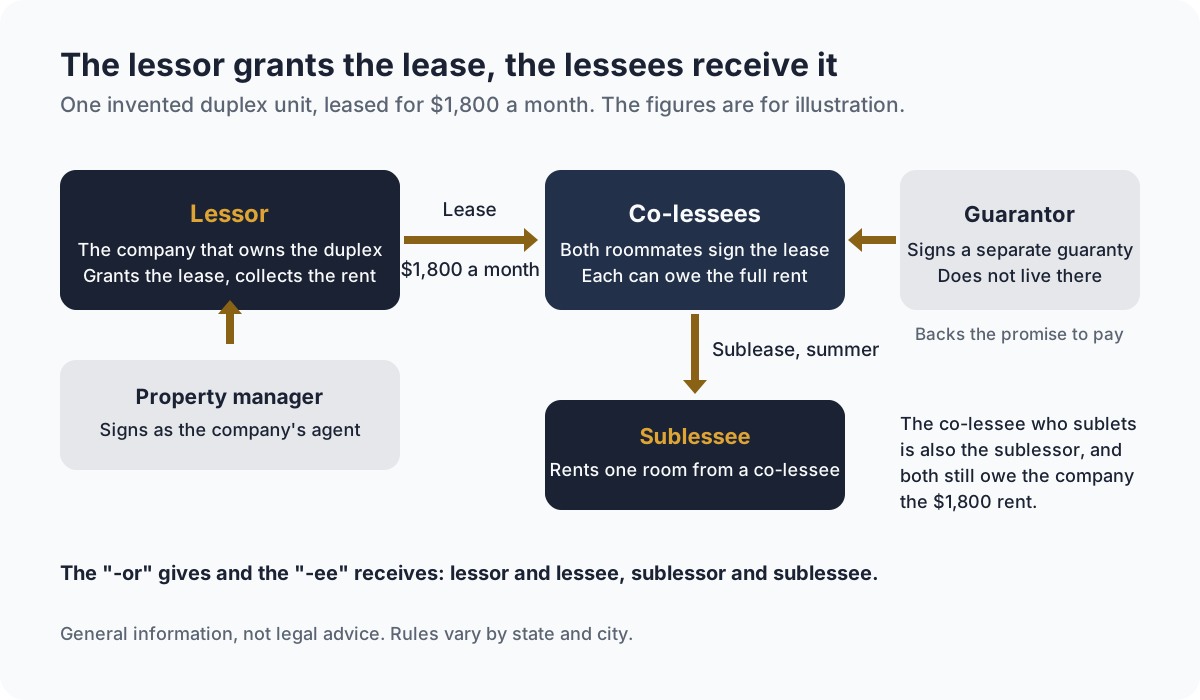
A worked example: one invented duplex lease
A company owns a duplex. Its property manager signs a one-year lease for one unit at $1,800 a month with two roommates, and a parent of one roommate signs a guaranty.
- Lessor: the company that owns the duplex. The manager signs as its agent, so the lease names the company as the lessor.
- Lessees: both roommates. Each signed the lease, so each is a co-lessee.
- Guarantor: the parent. The parent signed only the guaranty, so the parent is outside the lease and has no right to live in the unit.
- Sublessor and sublessee: in the summer, one roommate sublets their room for two months with the written consent the lease requires. That roommate is now also a sublessor, and the summer subtenant is the sublessee. Both roommates are still lessees, and the rent is still owed to the company.
When the lease ends, the roommates can sign a renewal, move out, or stay on under a month-to-month lease if the lease or local law allows it. The company stays the lessor through all three.
When the lessor or the lessee changes
- The property is sold. In many places, a buyer takes the property subject to the existing leases and becomes the new lessor. The lessees keep their rights under the lease, and their deposits are usually transferred to the buyer. Ask an attorney how this works where the property is.
- The property is refinanced. The lessor stays the lessor. A lender usually asks for the leases and a rent roll, which lists each lessee, rent and lease date, orders an appraisal, and compares the new loan with the property's value. The loan to value calculator works out that ratio, the equity left and what a cash-out refinance could leave after costs.
- A lessee leaves early. The lessee usually stays responsible for the lease unless the lessor agrees to release them, the lease is assigned with a release, or local law ends the duty. A lessee who stays on after the lease ends without a new agreement is a holdover tenant.
- A lessee is added. A new roommate becomes a lessee only by signing the lease, or an amendment to it. Until then, they are an occupant at most.
The free rent roll template lays out each unit's lessees, rent, deposit and lease dates in one sheet.
Lessor and lessee in other kinds of leases
The same two words are used for car leases, equipment leases, ground leases and commercial space. In a car lease the leasing company is the lessor and the driver is the lessee. The roles stay the same: the lessor owns the thing and grants its use, and the lessee pays to use it.
Frequently asked questions
Is the lessor the owner or the tenant?
The lessor is the owner, or whoever holds the right to lease the property out. The tenant is the lessee.
Is a tenant a lessee?
Yes. A tenant who signs a lease is a lessee. When several people sign the same lease, each one is a lessee.
Can a company be a lessor or a lessee?
Yes. When a company owns a rental, the company is the lessor, and a person signs the lease for it. A company can also be the lessee, for example when an employer leases a home for a member of staff.
Is a guarantor a lessee?
Usually no. A guarantor signs a separate promise to pay if the lessee does not and has no right to live in the home. A co-signer who signs the lease itself may share the lessee's responsibility to pay. Check the wording of the documents you use.
What is a sublessee?
A sublessee is a person who rents from the lessee under a sublease. The lessee becomes the sublessor and still answers to the lessor under the original lease.
Keep each lease and its paperwork together
Knowing who signed what is easier when every lease and its documents sit in one place. In KeyRing, you create a lease for each unit, attach documents to it, such as a signed guaranty or a sublease consent letter, and schedule a move-out or end the lease when the time comes. Rent-due, overdue and lease-expiry reminders go out by email and push automatically, and each month's rent invoices are drafted for you to approve before they are sent. See what KeyRing does or how plans are priced.
Free calculators and templates
- Loan to value calculatorLTV, combined LTV and equity, with the room left under your lender's limit.
- Rent roll templateEvery unit, lease, rent and balance in a property on one page, as of one date.
Browse all rental property calculators and free templates.