What is a holdover tenant? Your options when a lease ends and the tenant stays
By Jenna Whitfield -

A holdover tenant is a tenant who stays in the rental after the lease has ended, without a new lease or an agreement to stay. The lease term is over, the tenant is still there, and the next step is up to you: offer a new agreement, agree on a move-out date, or start the process to get the unit back.
This guide covers what holding over means, the options property owners usually have, holdover rent with a worked example for an invented unit, and how to make a holdover less likely. It is general information and is not legal advice. What happens when a tenant holds over is set by state law, and the rules differ a lot from state to state, so check your state's rules before you act. A local attorney can advise on a specific case.
Holdover tenant, tenant at sufferance and month-to-month
A tenant who stays past the end of the lease without your agreement is often called a tenant at sufferance. They came in legally under the lease, and they are still there after it ended.
What you do next can change the tenancy. In many states, accepting rent after the lease ends creates a month-to-month tenancy on the old lease's terms, and in some states it can renew the lease for a new term. Once that happens, ending the tenancy usually takes the written notice the state requires for a month-to-month tenant. Check your state's rules before you accept a payment from a tenant you want to move out, and keep a record of every conversation and payment.
Why tenants hold over
Most holdovers are short and have an ordinary cause:
- The next home is not ready, such as a closing that slipped or a new lease that starts a few days later.
- The tenant assumed the lease would renew or did not realize it was ending.
- A dispute, over the deposit, repairs or the rent, makes the tenant reluctant to leave.
- The tenant cannot find a new place in time.
Finding out which one you are dealing with helps you pick the right option.
Your options when a tenant holds over
- Talk first. Ask the tenant why they are still there and when they plan to leave. A short holdover with a firm date is often easiest to settle by agreement.
- Offer a renewal or a new lease. If you are happy to keep the tenant, a new signed lease ends the uncertainty. It is also the time to set a new rent; the rent increase calculator works out the new figure.
- Agree to month-to-month in writing. Set the rent, the due date and the notice either side gives to end it.
- Agree on a short extension with a move-out date. Put the date, the rent for the extra days and the condition of the unit in a signed note. A cash for keys agreement is one way to settle a harder case.
- Give written notice to leave. If you want the unit back, serve the notice your state requires, in the form it requires.
- File for eviction. If the tenant still does not leave, the court process, often called a holdover case, is the way to get possession. An attorney can tell you how it works where the property is.
Keep every step lawful. Changing the locks, removing belongings or shutting off utilities to push a tenant out is against the law in most states, even after the lease has ended, and it can leave you owing the tenant damages.
Holdover rent, with a worked example
Many leases include a holdover clause that sets the rent for days the tenant stays past the end of the lease, often at a higher rate, such as 150% of the lease rent. Whether a higher rate can be enforced, and how much higher it can be, depends on state law and how the clause is written. Check your state's rules before you rely on one.
An invented unit on Birch Street rents for $1,500 a month. The lease ends September 30, and the tenant stays until October 12 while their new home closes. The lease's holdover clause sets holdover rent at 150% of the lease rent. Using a 30-day month for the daily rate:
| Line | At the lease rent | At 150% holdover rent |
|---|---|---|
| Monthly rent | $1,500 | $2,250 |
| Daily rate (monthly rent / 30) | $50 | $75 |
| Holdover days (October 1-12) | 12 | 12 |
| Rent for the holdover | $600 | $900 |
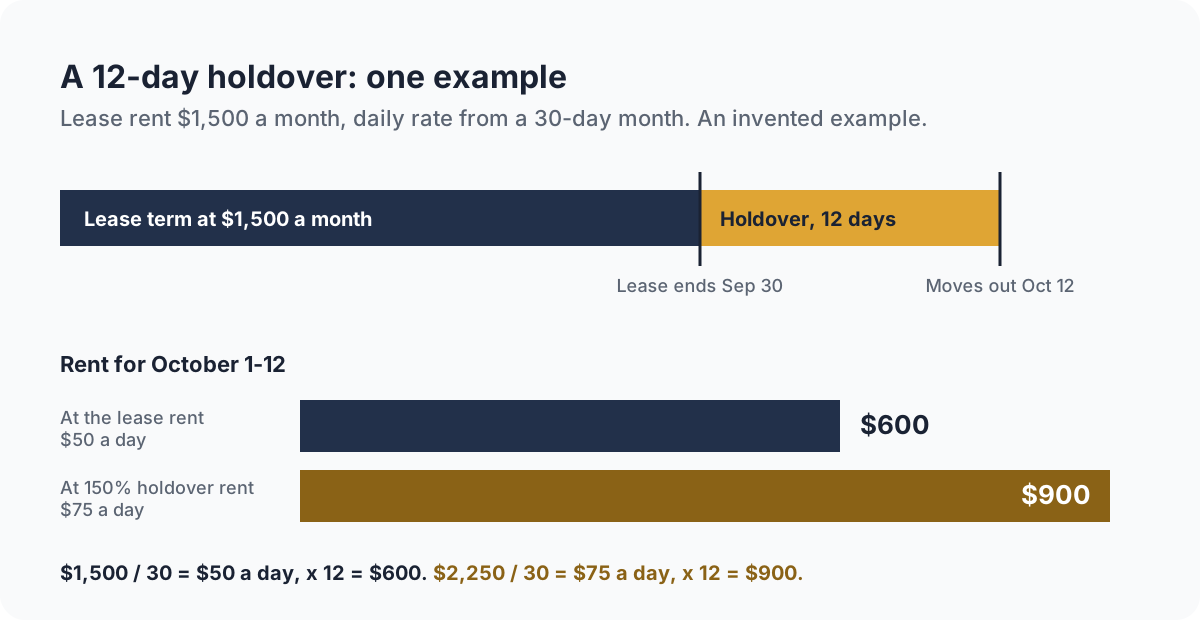
The arithmetic: $1,500 / 30 = $50 a day, and $50 x 12 = $600. At 150%, $1,500 x 1.5 = $2,250 a month, $2,250 / 30 = $75 a day, and $75 x 12 = $900. Counting the actual 31 days in October instead, the daily rate is $1,500 / 31 = $48.39 and the 12 days come to $580.65 at the lease rent. The prorated rent calculator runs both methods for any dates.
Agree on the amount in writing before the extra days start, and say whether accepting it changes the move-out date. That keeps the payment from being read as a new month-to-month tenancy.
How to make a holdover less likely
- Start the renewal conversation early, 60 to 90 days before the lease ends, so both sides know the plan.
- Send a written notice of non-renewal if you do not plan to renew, with the notice period your state requires.
- Confirm the move-out date and time in writing, and walk the unit together. The move-out checklist gives you a room-by-room list, and the wear and tear guide covers fair deposit deductions.
- Put a holdover clause in your leases, worded for your state, so the terms for extra days are agreed before they happen.
Frequently asked questions
What is a holdover tenant?
A tenant who stays in the rental after the lease ends without a new lease or the owner's agreement to stay. They are often called a tenant at sufferance until the owner either agrees to a new arrangement or starts the process to end the tenancy.
Can I charge a holdover tenant more rent?
Many leases set a higher holdover rent, such as 150% of the lease rent, for days past the end of the lease. Whether that rate can be enforced depends on state law and the wording of the clause. Check your state's rules before you charge it.
Does accepting rent from a holdover tenant create a new lease?
In many states, accepting rent after the lease ends creates a month-to-month tenancy, and in some it can renew the lease for a new term. Check your state's rules before you accept a payment, and put any agreement about the extra days in writing.
How much notice do I give a holdover tenant?
It depends on your state and on whether the tenancy has become month-to-month. Many states require at least 30 days of written notice to end a month-to-month tenancy, and some require more. Check your state's rules for the period and the form of the notice.
Can I change the locks on a holdover tenant?
In most states, no. Changing the locks, removing belongings or cutting off utilities to force a tenant out is against the law even after the lease ends. If the tenant will not leave, the court process is the way to get the unit back.
Keep lease end dates in view
A holdover usually starts with a lease end date that crept up on both sides. KeyRing sends automatic lease-expiry reminders by email and push, so the renewal conversation starts on time. When the tenancy ends, you can end the lease or schedule the move-out, and when it continues, you can create the new lease and attach the signed documents to it. See what KeyRing does or how plans are priced.
Free calculators and templates
- Prorated rent calculatorRent for a partial first or last month, by actual days or a 30-day month.
- Late fee calculatorA rent late fee as a flat amount or a percentage, with a grace period.
- Rent increase calculatorA new rent from a percentage or dollar increase, with the yearly difference.
- Move-out checklistEach room at move-out next to move-in, with damage and repair costs totalled.