Notice of entry: how much notice to give before you enter a rental
By Claire Navarro -

A notice of entry is a written notice that tells a tenant you, a vendor or someone working for you will enter their rental home, when you will come and why. Once a home is rented, the tenant has a right to privacy and to use the home without interference, often called quiet enjoyment. Most states balance that right against your need to repair, inspect and show the property by asking for advance notice before you go in.
This guide covers how much notice is typical, the usual reasons to enter, when entry without notice may be allowed, what a notice should say, a sample you can adapt and a worked timeline. It is general information and is not legal advice. Rules vary by state and city. Check your local law or an attorney.
How much notice do you need to give?
It depends on where the property is. Many states require 24 to 48 hours of notice before a non-emergency entry, and some ask only for "reasonable" notice without naming a number of hours. Some cities add rules of their own. Because the periods differ, this guide gives no state-by-state table: check your state's rental law, your city's rules and your lease before you set a time.
A few points come up in many states:
- Written notice is the safest record. Some states require the notice in writing. Where they do not, a written notice still shows what you told the tenant and when.
- How you deliver it can change the count. Some states say how a notice must be delivered, and some set a longer period when it is mailed.
- Reasonable hours. Many states limit entry to reasonable times, often normal business hours on weekdays, unless the tenant agrees to another time.
- The lease can add to the rules. A lease can promise a longer notice period. In many states a lease cannot shorten the period the law sets or take away the tenant's right to notice.
Common reasons to enter a rental
- Repairs and maintenance, including repairs the tenant asked for.
- Inspections, such as a periodic check, a smoke alarm test or a walk-through before move-out.
- Showing the home to a prospective tenant, buyer, lender, appraiser or insurer.
- Agreed services, such as pest control or a furnace filter change.
- Emergencies, covered in the next section.
Many states list the reasons that allow entry. For anything outside that list, you may need the tenant's agreement.
When can you enter without notice?
- A real emergency. Most states allow entry without advance notice when people or the property are in danger: a fire, a gas leak, a burst pipe or water coming through a ceiling. Afterwards, tell the tenant in writing when you entered, why and what you did.
- The tenant agrees. If the tenant agrees to a time, many states allow entry on shorter notice. Get the agreement in writing; a text or an email gives you a record.
- The tenant has moved out. Rules on when a home counts as abandoned vary, so check them before you treat a unit as empty.
- A court order that allows entry.
What counts as an emergency, as consent or as abandonment is set by state law. When in doubt, give notice.
What to put in a notice of entry
- The tenant's name, the property address and the unit.
- The date of the notice and how you delivered it.
- The date of entry and a time window, such as 10:00 am to noon.
- The reason for the entry.
- Who will enter: you, a property manager or a vendor's company.
- A name and a phone number or email for questions or to ask for another time.
- Your name and signature.
A sample notice of entry
Adapt this to your state's rules and your lease:
Notice of entry
To: [tenant name], [property address and unit]
Date of this notice: [date]. Delivered by: [in person, posted on the door, mail or email, as your state and lease allow].
We will enter your home on [date] between [start time] and [end time] to [reason, for example repair the kitchen faucet you reported].
The people entering: [your name, or the vendor's company and the worker's name if known].
If this time does not work for you, contact [name] at [phone or email] to arrange another time.
[Your name and signature]
Before you send it, check that the time between delivering the notice and the start of the entry window meets the period your state and your lease set.
A worked timeline
A tenant in an invented duplex reports a dripping kitchen faucet. You hand them a notice of entry on Monday at 3:00 pm for a plumber's visit on Thursday from 10:00 am to noon.
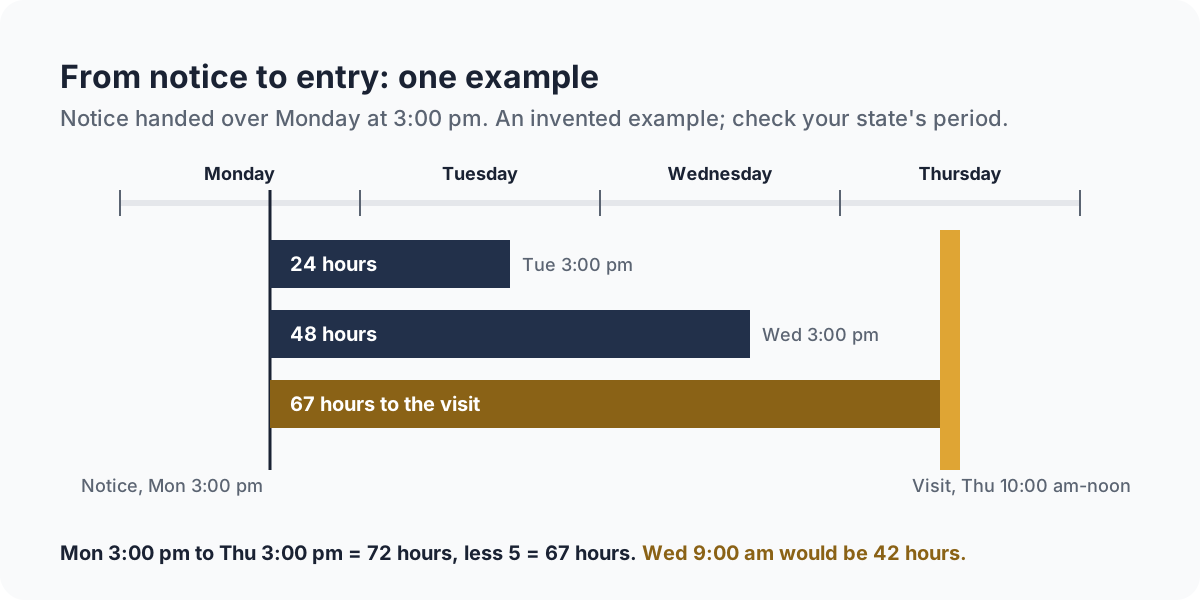
The arithmetic: Monday at 3:00 pm to Thursday at 3:00 pm is 3 x 24 = 72 hours, so Thursday at 10:00 am is 72 - 5 = 67 hours after the notice. That is more than a 24-hour or a 48-hour period. Moving the visit to Wednesday at 9:00 am would leave 48 - 6 = 42 hours, which is short of 48. If the tenant asks for the earlier time in writing, many states allow it; without that request, keep Thursday.
Had you mailed the notice, the count could start later. Check whether your state adds days for mail before you pick the date.
Good practice for every entry
- Give more than the minimum when you can. A tenant with a few days' warning can move a car, secure a pet or plan to be home.
- Knock and say who you are before you use a key, even after notice.
- Stay within the purpose and the time window in the notice.
- Keep visits to what the work needs. In many states, frequent or unreasonable entries can count as harassment.
- Keep a record: a copy of each notice, how and when you delivered it, and what was done. The maintenance request form asks the tenant whether you may enter when they are out and the best times to come.
- Plan the move-out walk-through. It usually needs notice too. The move-out checklist gives you a room-by-room list, and the wear and tear guide covers what you can fairly deduct.
- Keep giving notice after the lease ends. A tenant who stays on is usually still entitled to notice until the tenancy legally ends. The holdover tenant guide covers the options when a tenant stays past the lease.
What if the tenant refuses entry?
Start with a conversation. Ask why the time does not work and offer another one. Write down what was agreed. In many states a tenant cannot unreasonably refuse entry after proper notice for a lawful reason, and repeated refusals can be a lease violation. Avoid forcing your way in or changing the locks; talk with an attorney about the next step for your state.
Frequently asked questions
What is a notice of entry?
A written notice telling a tenant that the owner, a manager or a vendor will enter the rental home, with the date, the time window and the reason. Most states expect one before a non-emergency entry.
How much notice do I have to give before entering?
It depends on your state and city. Many states require 24 to 48 hours of notice, and some require only "reasonable" notice. Your lease can add to that. Rules vary by state and city. Check your local law or an attorney.
Can a property owner enter a rental without notice?
In a real emergency, such as a fire, a gas leak or a burst pipe, most states allow entry without advance notice. Many also allow it when the tenant agrees to the time. For routine repairs, inspections and showings, plan to give notice.
Does a notice of entry have to be in writing?
Some states require written notice, and others accept notice given in person or by phone. A written notice, by letter, on the door or by email where your lease allows it, gives you a record of what you said and when.
Can a tenant refuse entry?
A tenant can ask for another time, and you should try to agree on one. In many states a tenant cannot unreasonably refuse entry after proper notice for a lawful reason. If a tenant keeps refusing, talk with an attorney before you act.
Keep repairs and visits on the record
Most entries start with a repair. In KeyRing, tenants file maintenance requests with photos from the tenant portal and say whether you may enter. You assign staff or a vendor, track each job from new to closed, and keep every comment in the request's history, so what you and the tenant agreed sits with the request. See what KeyRing does or how plans are priced.