What is a pet addendum? The rules and charges for a pet in a lease

A pet addendum is a short document, signed by the property owner and the tenant, that is added to a lease to allow a pet in the home. It names the pet, sets the house rules for it and lists any pet charges, such as pet rent or a pet deposit. Putting all of this in writing means both sides know what is allowed and who pays if something goes wrong. In the worked example below, a tenant pays $45 a month in pet rent and a $400 refundable pet deposit for one dog, and the owner keeps $690 over a 12-month lease.
This page covers what a pet addendum is, what it usually includes, how pet charges fit in, how assistance animals are treated, the limits some places set, a worked example and the mistakes that cause problems. It is general information and is not legal or tax advice. Rules vary by state and city. Check your local law or an attorney.
What is a pet addendum?
Many leases say no pets are allowed without the owner's written consent. A pet addendum is that written consent, plus the terms that come with it. It becomes part of the lease, so its rules carry the same weight as the rest of the lease for as long as the tenancy lasts.
A pet addendum is one kind of lease addendum: a document attached to the lease that adds terms to it. The guide to a lease addendum explains how those documents work in general. When the change is to a term the lease already has, such as the rent amount or the due date, owners often use a lease amendment instead.
A pet addendum is often signed with the lease at move-in. It can also be signed mid-lease when a tenant asks to bring a pet home, or at a lease renewal when the terms are being updated anyway.
What a pet addendum usually includes
The details vary by owner and by place, and an attorney can help draft one that fits local rules. Most pet addendums cover:
- Each pet allowed. The type, breed, approximate weight, name and description of each animal, so there is no question about which pets the consent covers. A new or replacement pet usually needs a new addendum.
- Pet charges. Any pet rent, pet deposit or pet fee, the amount of each and when it is due.
- Rules of care. Vaccinations and licenses where required, leashes in shared areas and where the pet may be left alone.
- Damage. That the tenant is responsible for damage the pet causes beyond normal wear and tear.
- Waste and cleanliness. Picking up after the pet in the yard and shared areas, and keeping litter or cages clean.
- Noise and nuisance. What happens if the pet disturbs neighbors, such as repeated barking.
- Insurance. Whether the tenant must carry a tenant insurance policy that covers the pet.
- Breaking the rules. What steps follow if the terms are not met, such as written notice or removal of the pet, subject to local law.
Some owners also add a dated photo of the pet and a note of the unit's condition on the day the pet moves in. A rental inspection checklist is a simple way to record that.
Pet rent, pet deposits and pet fees
A pet addendum is usually where pet charges are written down. There are three common kinds:
- Pet rent. A monthly amount added to the rent for the pet.
- Pet deposit. A refundable amount held against pet damage and returned at move-out, less lawful deductions.
- Pet fee. A one-time charge, often at move-in, that the tenant does not get back where local law allows it.
The guide to pet rent vs pet deposit vs pet fee compares the three in detail. Many places treat a pet deposit as part of the security deposit, so a cap on the total deposit and the same return rules can apply to it. Some places require interest on deposits; the security deposit interest calculator works out simple interest at a rate you enter.
Assistance animals are generally treated differently
An assistance animal, such as a service animal or a support animal a tenant needs because of a disability, is generally treated under fair housing rules as a reasonable accommodation for the disability. That means it is usually not handled through a pet addendum. Pet rent, pet deposits and pet fees usually do not apply to it, and pet rules such as breed or weight limits usually do not either. The tenant can still be responsible for damage the animal causes.
Apply your pet rules the same way to every applicant and every tenant. Talk with an attorney before you turn down a request for an assistance animal or add any charge for one, because state and local rules can add to the federal ones.
Limits some places set
Some states and cities limit what a pet addendum can charge or require. Before you write one, check:
- Deposit caps. Whether a pet deposit counts toward a limit on the total deposit.
- Nonrefundable fees. Whether a pet fee may be kept, or must be refundable.
- Pet rent. Whether pet rent is capped or must be reasonable.
- Return rules. How and when a deposit must be returned and what the itemized list must include.
- Subsidized housing. Programs with their own rules on pets and pet charges.
A worked example: one dog on a 12-month lease
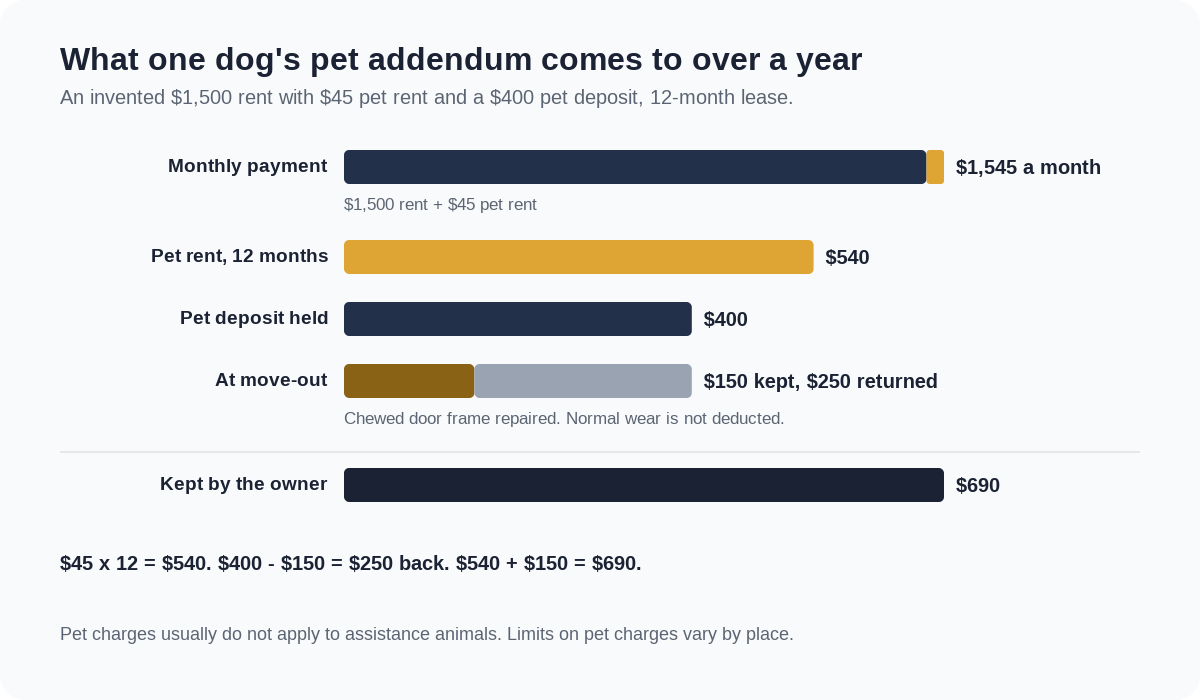
All the figures here are made up. A tenant rents a home for $1,500 a month on a 12-month lease. At move-in, both sides sign a pet addendum for one medium-sized dog. It sets pet rent of $45 a month and a refundable pet deposit of $400. Local law in this example allows both, and the total deposit stays within the local cap.
Each month the tenant pays:
- Rent plus pet rent: $1,500 + $45 = $1,545
Over the year:
- Pet rent over 12 months: $45 x 12 = $540
At move-out, the owner compares the unit with the move-in record. The dog has chewed a door frame, which costs $150 to repair. Faded paint and light floor scuffs are normal wear, so they come out of the owner's pocket. The guide to normal wear and tear vs damage explains where that line usually falls.
- Pet deposit returned: $400 minus $150 = $250, with an itemized list of the deduction
- Kept by the owner over the lease: $540 + $150 = $690
Mistakes that cause problems
- No written consent. A pet agreed in conversation is hard to prove later. Put each pet and its terms in a signed addendum.
- Vague pet details. An addendum that says "one dog" with no description leaves room to argue about a second or replacement dog.
- Charging for an assistance animal. Pet charges usually do not apply to assistance animals. Check with an attorney first.
- Ignoring deposit limits. A pet deposit can count toward a local cap on the total deposit.
- Deducting normal wear. A pet deposit covers damage. Worn carpet and faded paint from ordinary living usually stay the owner's cost.
- Uneven rules. Applying pet rules to some tenants and not others can raise fair housing problems. Use the same written rules for everyone.
Frequently asked questions
What is a pet addendum in a lease?
It is a signed document added to the lease that allows the tenant to keep a named pet. It sets the rules for the pet, any pet charges and who pays for damage the pet causes.
Is a pet addendum required?
Many leases ban pets without written consent, and a pet addendum is the usual way to give it. Even where the lease is silent, putting the pet and its terms in writing helps both sides if a question comes up later.
Can a tenant add a pet in the middle of a lease?
Usually yes, if the owner agrees. Both sides sign a pet addendum at that point, and any pet rent starts from the date the addendum sets.
Does a pet addendum apply to assistance animals?
Generally no. Assistance animals for people with disabilities are usually treated as a reasonable accommodation, so pet rent, pet deposits and pet fees usually do not apply. The tenant can still be responsible for damage.
How much can an owner charge for a pet?
It depends on local law and the market. Some places cap deposits or limit pet fees. In the example, $45 a month in pet rent comes to $540 over a 12-month lease, and $150 of a $400 pet deposit is kept for damage.
Keep pet charges and the deposit on the lease
A pet addendum works when its charges and documents sit with the lease. In KeyRing, you create a lease for each unit and attach documents to it, such as a signed addendum. You add one-off and recurring charges to a lease, such as pet rent, parking or a repair, and credits when you need them. Each lease keeps a deposit ledger: what was received, deductions, interest credited to the tenant, refunds, the balance held and the date it is due back. Each month's rent invoices are drafted for you to approve before they are sent. See what KeyRing does or how plans are priced.
Free calculators and templates
- Security deposit interest calculatorSimple interest on a deposit between two dates at your rate.
- Rental inspection checklistA room by room check of an occupied rental, with the repairs it turns up.
Browse all rental property calculators, free templates and the glossary.
From the blog
- Pet rent vs pet deposit vs pet fee: what each one covers and how to charge itPet rent is monthly, a pet deposit is refundable and a pet fee is a one-time charge. How each works, what to check locally and a worked example.
- What is a lease addendum? Common addenda and how to add oneA lease addendum adds new terms to a signed lease, such as a pet or a parking space. How it differs from an amendment, common addenda and how to add one.
- What is normal wear and tear? How it differs from damageNormal wear and tear is the decline that comes from ordinary use. See how it differs from damage, common examples and how to work out a fair deposit deduction.